
Case Study 4: Breaking a Supplier Deadlock: Avoiding a 20% Penalty Through Data-Driven Negotiation
From Supplier Deadlock to a Permanent Manufacturing Fix
The Impact
- Client Category: Tier-1 Importer for Major European Retailers
- Project Crisis: Severe water leakage on a flagship handheld vacuum cleaner created a 1–2 month deadlock over rework vs. tooling modification
- Result: Avoided a 20% late-delivery penalty by shifting the supplier from high-risk manual rework to a permanent tooling modification
Deadlock Resolved | 20% Penalty Avoided | Permanent Fix Established
Executive Summary
The Problem
A 1–2 month deadlock stalled production while the factory insisted on risky manual rework instead of addressing the mold-related root cause.
My Action
I used COPQ logic, rework-process mapping, and data-driven cost comparison to align the decision around a permanent tooling fix.
The Result
The supplier switched to tooling modification, shipment stayed on track, and the 20% contractual penalty was avoided.
Deadlock → Rework Risk Mapping → COPQ Comparison → Permanent Tooling Fix
1. The Deadlock

During production of a flagship handheld vacuum cleaner for a major European retail program, a severe water leakage issue emerged and stalled progress.
- The factory insisted on a manual “gluing” rework process but could not provide a standardized SOP
- The internal Quality Manager had already spent nearly two months on-site without resolving the deadlock
- The factory owner resisted mold modification because of the upfront tooling cost
With the deadline approaching, the project was heading toward a severe 20% late-delivery contractual penalty.
2. My Strategic Intervention
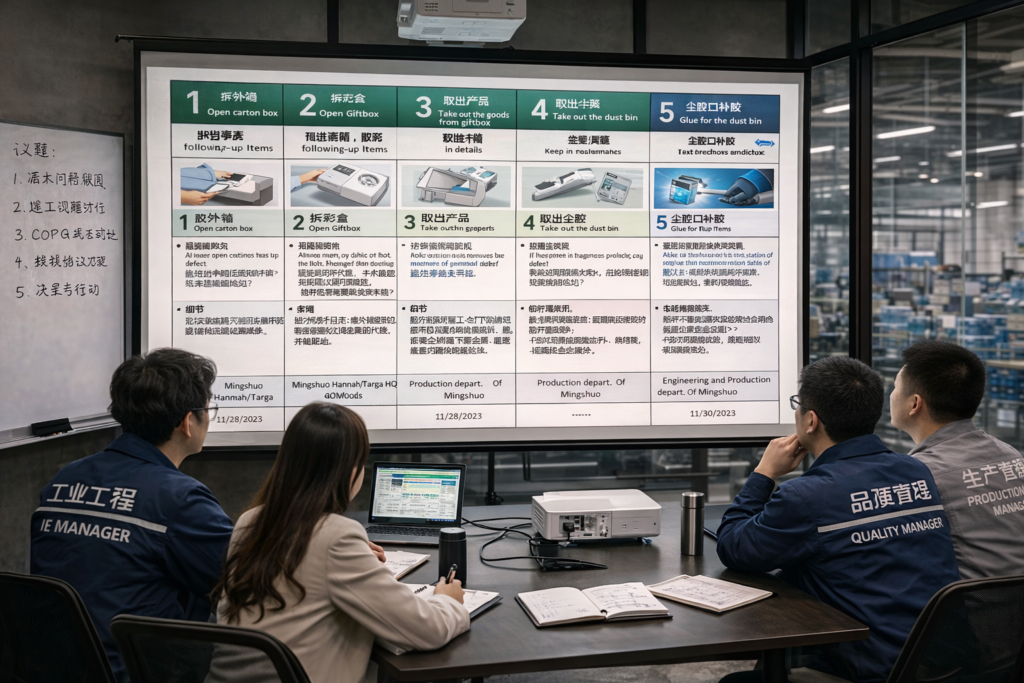
Step 1: Cross-Functional Rework Mapping
- Brought Production, Quality, and Engineering into one structured review to map the proposed rework process
- Required the team to define each process step, control point, labor input, and unresolved failure variable
Step 2: Exposing the Black Box of Rework
- Built a granular tracking matrix covering labor, process steps, unresolved variables, quality risks, and execution instability
- Made the operational complexity and hidden cost of manual rework visible to all decision-makers
Step 3: COPQ-Based Decision Alignment
- Compared the cost of endless high-risk rework against one-time tooling modification
- Shifted the conversation from argument and authority to financial logic, quality risk, and launch impact
3. Business Impact
Deadlock Resolved
20% Penalty Avoided
Permanent Mold Modification
This initiative turned a month-long supplier stalemate into a permanent technical fix. By resolving the issue through analytical alignment rather than conflict, the launch window was protected and on-time shipment was achieved.
More importantly, the decision shifted from supplier preference to measurable business logic: rework risk, labor uncertainty, failure exposure, tooling cost, and contractual penalty impact.
What This Case Proves
When supplier deadlocks occur, the real issue is not disagreement — it is the absence of shared decision logic.
I resolve these conflicts by exposing hidden costs and aligning teams through data.
This intervention transformed a stalled negotiation into a clear, data-driven decision and a permanent solution.
What This Means for Remote Risk Review
Before a supplier deadlock reaches this level of escalation, many warning signs can often be detected remotely: vague rework proposals, missing SOPs, unclear process-control evidence, unresolved tooling responsibility, hidden labor cost, weak COPQ logic, or supplier claims that do not match available data.
A remote Supplier Deadlock Review can assess whether the supplier’s proposed solution is technically credible, commercially rational, and operationally controllable before the project loses more time.
This is especially useful when the dispute is not only technical, but economic: who pays for rework, whether tooling modification is justified, what quality risk remains, and what delay exposure the customer may face.